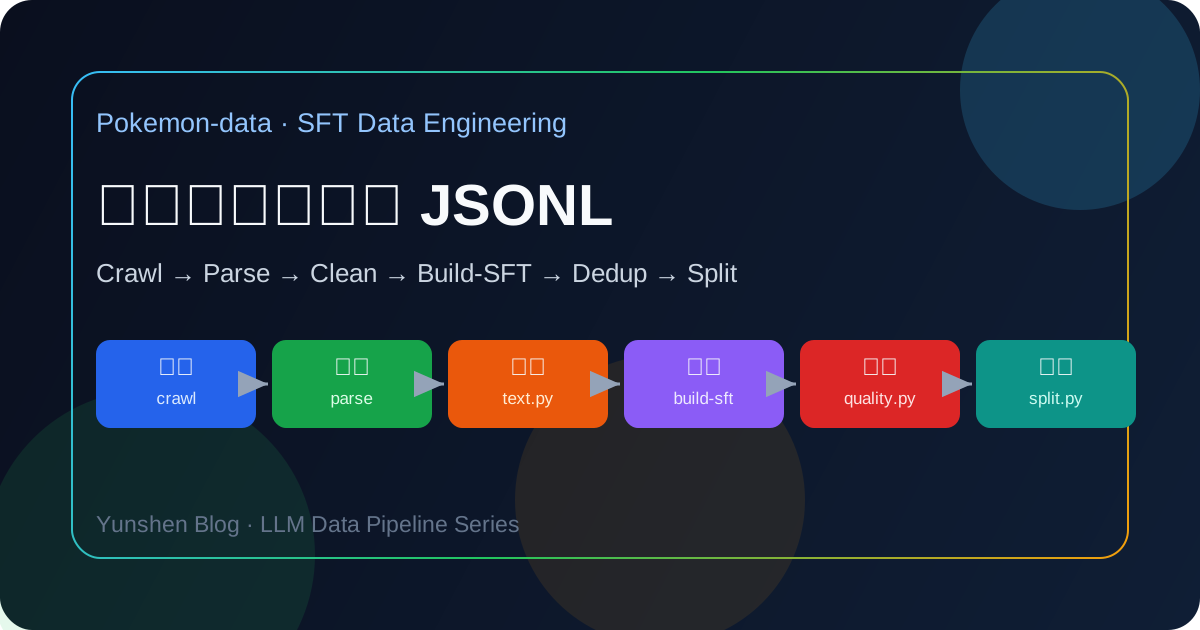
这篇只讲数据,不讲训练参数。核心问题是:怎么把公开网页/API 数据,稳定地变成可用于 SFT 的高质量样本。
系列导航:下一篇见 pokemon qwen 微调系列(二):SFT 训练实战。
TL;DR
| 阶段 | 输入 | 输出 | 关键实现 |
|---|---|---|---|
| 抓取 | configs/sources.yaml | data/raw/<source>/*.{json,html} | crawl + BaseCrawler.run() |
| 解析 | 原始 HTML/JSON | data/processed/articles/<source>/*.json | parse_* -> Article |
| 清洗 | 原始文本字段 | 干净的 summary/main_content | clean_paragraph/clean_flavor |
| SFT 转换 | Article | Alpaca/Chat JSONL | datasets/sft.py |
| 质检去重 | 原始样本集 | 过滤后样本集 | passes_quality + exact_dedup + near_dedup |
| 切分与统计 | 最终样本集 | train/val/test + DATASET_CARD.md | split.py |
1) 数据爬取:来源配置与合规抓取
抓取入口非常直接:
pokemon-data crawl -c configs/sources.yamlconfigs/sources.yaml 里定义了三类来源:
| source | 类型 | 当前用途 | 备注 |
|---|---|---|---|
pokeapi | 结构化 JSON API | 主数据源 | 覆盖 pokemon/species/type/ability/move |
wikipedia | HTML 页面 | 补充自然语言描述 | 规模小但文本更自然 |
fandom | HTML 页面 | 当前不产出 | 被 robots.txt 禁止,按策略跳过 |
关键不是“能抓多少”,而是“抓取是否可重跑、可追溯、合规”。
1.1 抓取层怎么保证可重跑
BaseCrawler.run(resume=True) 会先查缓存文件是否存在(_cached_path),存在则跳过网络请求。
因此你扩 ID 范围重跑时,不会重复轰炸上游站点。
1.2 抓取层怎么保证合规
utils/http.py + utils/robots.py 做了三层约束:
- 抓取前先查
robots.txt,不允许就抛RobotsDisallowed。 - 按 host 做最小请求间隔(
MIN_REQUEST_INTERVAL,默认 1 秒)。 - 请求失败只对网络抖动和 5xx 做重试,不盲目重放 4xx。
2) 解析与清洗:把 raw 变成 Article
解析入口:
pokemon-data parse这个阶段会把 data/raw/<source>/ 的原始文件,统一成 Article:
class Article(BaseModel):
    source: str
    identifier: str
    url: str
    title: str
    summary: str
    main_content: str
    infobox: Infobox | None = None
    categories: list[str]
    extras: dict[str, Any]
2.1 为什么 Article 是关键中间层
Article 把来源差异(JSON API vs HTML 页面)统一成一个稳定接口。
后面的 SFT 模板只面向 Article,不用关心数据最初是从哪里来的。
2.2 清洗做了什么
cleaning/text.py 的核心链路:
| 函数 | 作用 |
|---|---|
clean_paragraph | NFKC 归一化、去引用标记、去 [edit]、压空白 |
strip_control | 移除控制字符 |
dehyphenate | 修复断词(inter-\nnational -> international) |
reflow_flavor_text | 修复 flavor text 里的软换行 |
clean_flavor | reflow_flavor_text + clean_paragraph |
3) SFT 转换:Article 到 Alpaca / Chat
转换入口:
pokemon-data build-sft \
  --out data/datasets/sft/pokemon_sft.jsonl \
  --format both \
  --split --dedup
datasets/sft.py 会把每篇 Article 展开成多种训练样本:
| kind | 目标 |
|---|---|
factoid | 单字段问答,强化精确召回 |
summary | 概括能力 |
long_form | 长回答组织能力 |
list | 列表式输出 |
structured | 结构化(JSON 风格)输出 |
reasoning | 轻量推导(如属性克制) |
multi_turn | 多轮会话风格 |
3.1 两种输出格式
| 格式 | 结构 | 典型用途 |
|---|---|---|
| Alpaca | {instruction, input, output, source, identifier, kind} | 通用 SFT trainer |
| Chat | {messages:[{role,content}...], source, identifier, kind} | ChatML/ShareGPT 流水线 |
3.1.1 字段释义表
Alpaca 字段
| 字段 | 含义 | 示例 |
|---|---|---|
instruction | 用户任务指令,定义模型“要做什么” | Give a brief Pokedex-style description of Flare-Boost. |
input | 可选补充上下文;没有就留空字符串 | "" |
output | 期望答案(监督信号) | Increases Special Attack to 1.5× when burned. |
source | 样本来源标记,便于按来源统计/过滤 | pokeapi |
identifier | 源数据唯一标识,便于追溯与去重 | ability_138 |
kind | 样本类型标签,便于配比与切片训练 | summary |
Chat 字段
| 字段 | 含义 | 示例 |
|---|---|---|
messages | 多轮消息数组,按顺序组成上下文 | [{"role":"user","content":"Tell me about Bulbasaur."}, ...] |
role | 消息角色(通常为 system/user/assistant) | assistant |
content | 当前消息文本内容 | grass/poison |
source | 样本来源标记 | pokeapi |
identifier | 源数据唯一标识 | pokemon_1 |
kind | 样本类型标签 | multi_turn |
3.2 为什么模板是“确定性改写”
模板不是随机采样,而是 _pick(options, identifier, intent) 做确定性选择。
同一个 identifier 在重跑时保持稳定,既保留表达多样性,又保证复现性。
4) 质量过滤与去重:避免“脏监督”
datasets/quality.py 里有三道闸门。
4.1 质量过滤(passes_quality)
| 规则 | 默认阈值 |
|---|---|
| 指令长度 | 10 <= len(instruction) <= 500 |
| 输出长度 | 短答案类最小 2,其它最小 20;最大 4000 |
| 重复率 | max_ngram_repeat_ratio <= 0.25 |
| 空值检查 | instruction/output 不能为空 |
4.2 精确去重(exact_dedup)
对 instruction + input + output 做标准化后拼接,取 sha256 作为唯一键。
完全相同样本只保留一条。
4.3 近重复去重(near_dedup)
| 项目 | 参数 |
|---|---|
| shingles | 字符 5-gram |
| MinHash 数 | 64 |
| LSH band 大小 | 8 |
| 近重复阈值 | Jaccard >= 0.85 |
| 生效下限 | 输出长度 >= 40 |
5) 确定性切分与数据卡
datasets/split.py 的切分不是随机 shuffle,而是 hash 路由。
同一条样本跨多次构建会落在同一 split,利于复现对比。
路由规则:
| 条件 | split |
|---|---|
r < 0.95 | train |
0.95 <= r < 0.975 | val |
r >= 0.975 | test |
构建结束会输出:
| 文件 | 作用 |
|---|---|
pokemon_sft.train/val/test.jsonl | Alpaca 格式 |
pokemon_sft.chat.train/val/test.jsonl | Chat 格式 |
DATASET_CARD.md | 来源分布、kind 分布、token 估算统计 |
6) 一条完整可复现命令链
# 1) 抓取
pokemon-data crawl -c configs/sources.yaml

# 2) 解析
pokemon-data parse

# 3) 构建 SFT(Alpaca + Chat,含去重和切分)
pokemon-data build-sft \
  --out data/datasets/sft/pokemon_sft.jsonl \
  --format both \
  --split \
  --dedup

# 4) 构建高质量 chat 子集(可选)
pokemon-data build-hq-chat \
  --out data/datasets/sft/pokemon_sft_hq.chat.jsonl \
  --target-size 10000 \
  --split
7) 数据侧常见坑
| 症状 | 根因 | 修复 |
|---|---|---|
| 样本量很大但回答质量一般 | factoid 占比过高,表达单一 | 增加 long_form/summary/multi_turn 配比 |
| 重跑后评测波动大 | 切分不稳定或数据被覆盖 | 用 hash 切分 + 固定输入目录 |
| 模型输出模板味过重 | 同类模板近重复过多 | 放宽模板池 + 强化 near-dedup |
| 文本中出现断词/奇怪换行 | flavor text 软换行未修复 | 保证 clean_flavor 链路生效 |
8) 数据集里的典型样本展示
下面摘几条真实样本(已与项目中的 JSONL 对齐),覆盖不同 kind 和格式。
8.1 Alpaca:factoid
这类样本训练“精确召回”能力:用户问一个很窄的问题,模型要直接给出短而准的答案。
{"instruction":"Name a Pokemon that can have the ability 'Technician'.","input":"","output":"Meowth","source":"pokeapi","identifier":"ability_101","kind":"factoid"}8.2 Alpaca:summary
这类样本训练“压缩表达”能力:把一个概念用一句话讲清楚,减少冗长输出。
{"instruction":"Give a brief Pokedex-style description of Flare-Boost.","input":"","output":"Increases Special Attack to 1.5× when burned.","source":"pokeapi","identifier":"ability_138","kind":"summary"}8.3 Alpaca:reasoning
这类样本训练“规则推导”能力:不是只背答案,而是基于类型克制规则做一步逻辑判断。
{"instruction":"If I use a Fire-type move against a bug-type Pokemon, is it effective?","input":"","output":"Yes. Fire-type moves are super-effective against bug types, so damage is doubled.","source":"pokeapi","identifier":"type_10","kind":"reasoning"}8.4 Alpaca:structured
这类样本训练“结构化输出”能力:让模型按指定字段返回稳定 JSON,方便下游程序消费。
{"instruction":"Return a JSON object describing the move Scratch with fields: name, type, damage_class, power, accuracy, pp.","input":"","output":"{\"name\": \"Scratch\", \"type\": \"normal\", \"damage_class\": \"physical\", \"power\": 40, \"accuracy\": 100, \"pp\": 35}","source":"pokeapi","identifier":"move_10","kind":"structured"}8.5 Chat:multi_turn
这类样本训练“多轮上下文保持”能力:后续追问要继承前文语境,而不是每轮都当作新问题。
{"messages":[{"role":"system","content":"You are a knowledgeable assistant specialised in the Pokemon franchise. Answer based on canonical Pokedex and game data. Be concise and factual."},{"role":"user","content":"Tell me about Bulbasaur."},{"role":"assistant","content":"Bulbasaur is a grass/poison-type Pokemon."},{"role":"user","content":"What type is it?"},{"role":"assistant","content":"grass/poison"},{"role":"user","content":"What's its strongest base stat?"},{"role":"assistant","content":"Special Attack at 65."}],"source":"pokeapi","identifier":"pokemon_1","kind":"multi_turn"}总结
SFT 数据工程的关键不是“抓更多”,而是把抓取、清洗、转换、质检、切分做成可重跑、可解释、可复现的流水线。
只要这条链路稳定,后面的模型训练迭代才有可靠地基。